


Recurring Bin Cleaning
Recurring bin cleaning is a scheduled maintenance service in which service providers wash, degrease, and deodorize curbside waste, recycling, and organic containers on an ongoing interval such as monthly, bi-monthly, or quarterly.
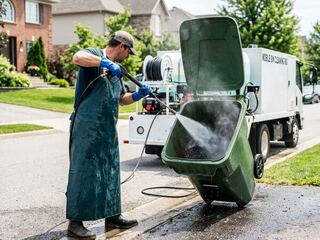
6 possible tasks · typical 5-step process
What it is
This service involves routine washing and sanitation for curbside trash, recycling, and organic waste bins using mobile, self-contained pressure washing equipment. Providers typically coordinate visits with local municipal collection schedules to clean containers after they have been emptied, which is intended to address accumulated grime, residue, and organic matter. The service can apply to standard residential rollout carts as well as commercial waste containers, but typically does not include structural repairs, plastic welding, hardware replacement, or the removal of bulk trash.
What Recurring Bin Cleaning can include
High-Pressure Interior Washing
Placement of inverted bins over automated rotating spray heads that apply pressurized hot water to help loosen and rinse away accumulated sludge and interior debris.
Degreasing and Residue Breakdown
Application of cleaning solutions or specialized degreasers intended to help break down oils, grease, and settled waste adhering to interior corners and bottom surfaces.
Antimicrobial Sanitization
Application of sanitizing agents across container surfaces, which is intended to reduce odor-causing bacteria and microbial buildup.
Exterior and Contact-Point Detailing
Rinsing and wiping exterior surfaces, with attention to common handling points such as lids, grab handles, and wheels to remove surface grime.
Deodorizing Treatment
Application of neutralizing sprays or scented additives designed to help manage unpleasant waste odors between scheduled cleanings.
Self-Contained Wastewater Capture
Collection of wash water directly into vehicle-mounted holding tanks, which is intended to avoid discharging runoff into residential streets, driveways, or storm drains.
How the work is typically performed
- 1
Post-Collection Staging
Service providers generally arrive on scheduled service days after municipal collection trucks have emptied the bins, servicing the containers at the curbside or a designated staging area.
- 2
Mechanical Inversion and Hot-Water Blast
Containers are mounted onto hydraulic lift mechanisms on specialized cleaning vehicles, inverting them over wash bays where high-pressure hot water cycles through the interior.
- 3
Manual Detailing and Disinfection
Technicians may utilize hand-held pressure wands or brushes to address exterior surfaces, stubborn spots, and handle areas using sanitizing solutions.
- 4
Drying and Deodorizing
Excess wash water is drained or vacuumed into the onboard recovery system, followed by the optional application of an odor-counteracting spray.
- 5
Return to Designated Area
Containers are typically repositioned at the curb, along the driveway perimeter, or in another designated area agreed upon with the customer.
Common reasons customers look for this service
- Presence of persistent or strong odors emerging from stored waste and recycling bins
- Visible accumulation of food residues, grease, or liquids on interior surfaces
- Noticeable insect, fly, or rodent activity near bin storage areas
- Warmer temperatures that accelerate the decomposition of organic materials
- Ongoing disposal of compostable items, pet waste, or organic refuse
About Recurring Bin Cleaning
What service frequencies are typically offered for recurring bin cleaning?
Frequencies can vary by provider, though options often include bi-weekly, monthly, or quarterly visits. Properties with higher volumes of organic or pet waste may select more frequent visits based on personal preference.
How are containers typically prepared prior to a scheduled cleaning?
Providers generally require containers to be completely empty of trash, yard clippings, and loose debris before washing can occur. Visits are commonly scheduled on standard trash pickup days so containers can be cleaned once emptied by the hauler.
How is wastewater managed during mobile bin cleaning?
Mobile cleaning units are typically designed with integrated gray-water recovery systems. Wash water is collected into onboard holding tanks rather than running into storm sewers, and is later discharged at approved disposal facilities.
This page provides general information about Recurring Bin Cleaning for reference only. It is not professional, safety, medical, legal or financial advice, and it does not describe the services of any particular provider. Scope, methods and timing vary by provider and situation. Kuldesac does not perform these services; contact a qualified provider directly to discuss your specific needs.